
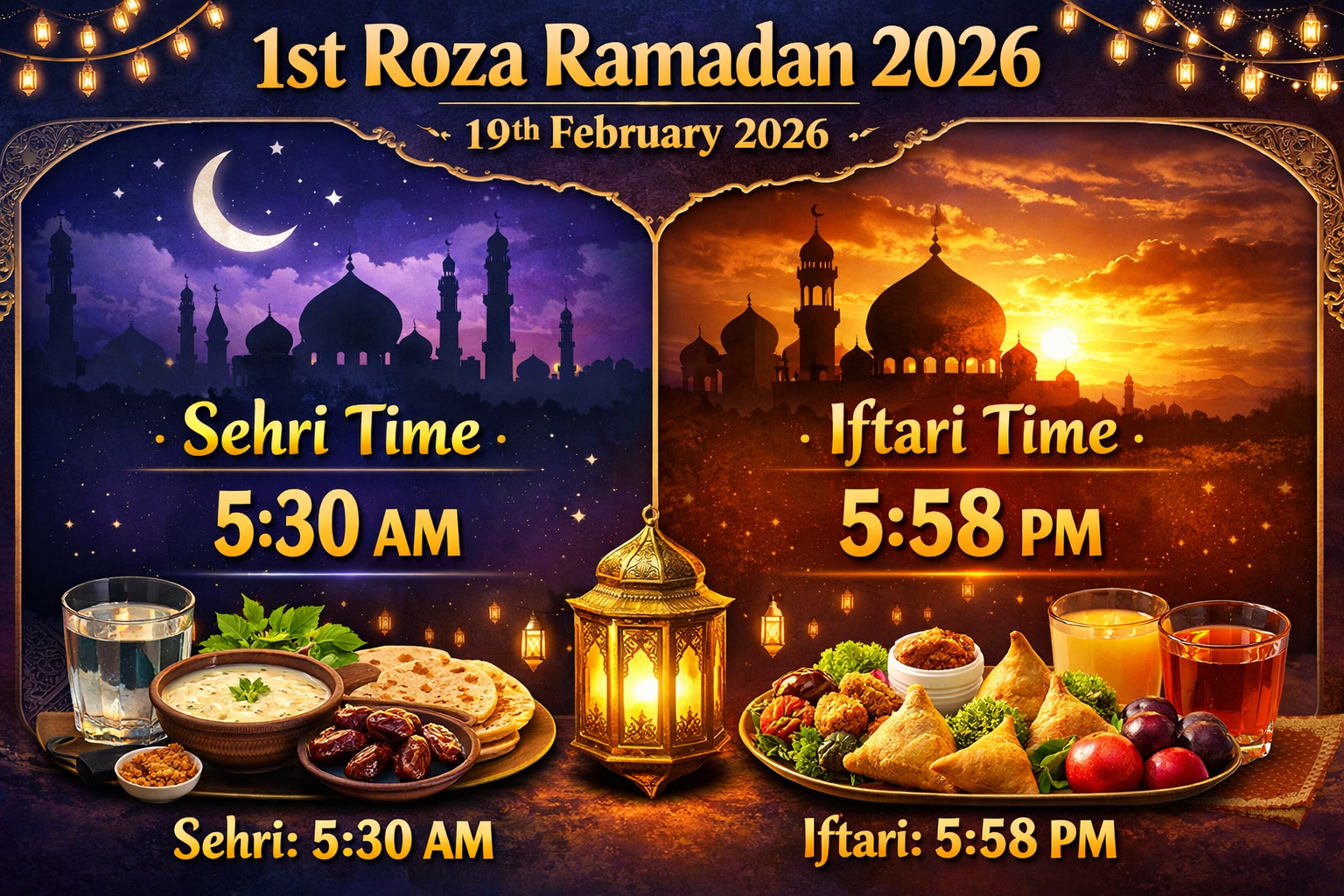
As the years progress, the holy month of Ramadan gradually shifts back through the Gregorian calendar, bringing fasting days into the cooler, shorter winter months. For Muslims in Pakistan and around the world, this transition offers a different spiritual experience compared to the long, hot summer fasts of the past decade.
Planning ahead is essential for making the most of this blessed month. While the exact start date depends on the sighting of the moon, astronomical calculations give us a strong indication of when the 1st Roza of Ramadan 2026 will fall. This guide covers the tentative schedule, specifically focusing on the Sehri and Iftar timings for the first fast in Pakistan.
When is the 1st Ramadan in Pakistan 2026?
The Islamic calendar is lunar, meaning months are determined by the phases of the moon. This causes Ramadan to move back by approximately 10 to 11 days each year.
For 2026, the tentative start date for the 1st Ramadan in Pakistan is expected to be February 19, 2026. This means the moon sighting (Chand Raat) will likely occur on the evening of February 18. However, depending on the visibility of the moon, there is a slight possibility it could fall a day earlier or later.
1st Ramadan 2026 Sehri and Iftar Timings (Pakistan)
Knowing the schedule helps households prepare meals and manage sleep routines. Because this Ramadan falls in February, the fasting hours will be significantly shorter than in summer.
Here are the estimated timings for the first fast. Please note that these times can vary by a few minutes depending on your specific city (e.g., Karachi, Lahore, Islamabad, Peshawar, or Quetta).
1st Ramadan 2026 Sehri Time
For the first fast, likely on February 19, the end of Sehri (Suhoor) is expected to be early in the morning.
- Sehri Ends (Approx): 05:15 AM – 05:30 AM
It is recommended to finish eating at least 5 to 10 minutes before the call to prayer (Azan-e-Fajr) to ensure the fast is valid.
1st Ramadan 2026 Iftar Time
The time for breaking the fast will align with sunset.
- Iftar / Maghrib (Approx): 05:54 PM – 06:00 PM
These shorter daylight hours mean the duration of the fast will be roughly 12 to 13 hours, making it physically less demanding than the 15+ hour fasts observed in June or July.
Ramadan 2026 Start and End Dates
Understanding the full duration of the month helps in planning for Eid-ul-Fitr.
- Start Date: February 19, 2026 (Tentative)
- End Date: March 19 or March 20, 2026
This places the holy month squarely in the late winter and early spring season in Pakistan. The weather is generally pleasant, avoiding the extreme heat that often leads to dehydration.
Preparing for a Winter Ramadan
While shorter days are a relief for many, a winter Ramadan requires different preparations.
- Hydration is still vital: You might not feel as thirsty in cooler weather, but your body still needs water. focus on drinking plenty of fluids between Iftar and Sehri.
- Nutrient-dense Sehri: With a shorter window to eat, ensure your morning meal contains complex carbohydrates (like oats or whole wheat) and protein to sustain energy levels throughout the morning.
- Adjusting Sleep: The nights are longer, which allows for more rest, but waking up at 4:30 AM for Sehri can still be challenging in the cold. Plan your sleep schedule to ensure you aren’t exhausted during the day.
Confirming Your Local Schedule
While the dates and times provided here are based on astronomical data, the definitive timings for 1st Ramadan 2026 Sehri and Iftar timings in Pakistan will be confirmed by the Ruet-e-Hilal Committee upon the sighting of the moon.
As the date approaches, consult your local mosque or a verified prayer time application specific to your city. The difference in longitude between cities like Karachi and Islamabad can result in a time difference of 20 to 30 minutes for both Sehri and Iftar.
May this upcoming Ramadan bring peace, health, and blessings to you and your family.